Creatine · Guide
Creatine After Menopause: What It Can Do for Women Over 40 and 50
Creatine can help women after menopause build and keep muscle, but only alongside strength training, and the effects are modest. On its own, it does very little. The evidence on bone is mixed: in the largest trial so far, creatine didn't improve bone density, though it did help preserve some aspects of hip bone structure that matter for fracture risk (Chilibeck et al., 2023).
If you're over 40 or 50 and lifting weights, or planning to start, 3–5 g of creatine monohydrate a day is a reasonable, well-studied addition. If you're not training, it's unlikely to do much for you.
Why menopause changes things
After menopause, falling estrogen speeds up the loss of both muscle and bone. Muscle loss with age (sarcopenia) makes everyday tasks harder and raises the risk of falls. Bone loss raises the risk that a fall leads to a fracture.
Women also tend to start with lower creatine stores than men, and eat less of the foods that supply it, like red meat and fish (Smith-Ryan et al., 2021). That's one reason researchers think creatine might be worth more to women, not less.
What the research shows
| Outcome | Evidence | What it looks like |
|---|---|---|
| Lean muscle, with strength training | Good | More lean tissue gain than training alone |
| Strength, with strength training | Mixed | Strength gains matched placebo in the 2-year trial |
| Walking speed | Early | Faster in the 2-year trial |
| Bone density | Mixed | No improvement in the largest trial |
| Hip bone structure | Early | Better preserved in one 2-year trial |
| Without exercise | Weak | Little effect on muscle or bone |
| Mood and brain | Early | Small trials only |
The 2-year trial
The biggest study so far followed 237 postmenopausal women, average age 59, for two years (Chilibeck et al., 2023). Everyone did resistance training three days a week and walked six days a week. Half took creatine, about 0.14 g per kg of bodyweight a day; half took a placebo.
- Bone density changed no more with creatine than with placebo.
- Hip bone structure: creatine preserved some measures at the hip that predict how well bone resists bending and buckling, which matter for fracture risk.
- Lean tissue: among women who completed the study as planned, the creatine group gained about 2.3 kg of lean tissue against about 1.6 kg on placebo.
- Walking: the creatine group got faster over an 80 m walk; the placebo group didn't.
- Strength: bench press and hack squat gains were about the same in both groups. The training itself did most of the work.
That's a genuinely mixed result. It's encouraging for muscle and bone strength, but it doesn't show creatine prevents osteoporosis, and the lean tissue finding came from a secondary analysis.
Creatine without exercise
A separate 2-year trial gave 200 postmenopausal women 3 g of creatine a day with no exercise program, and found no effect on bone, lean mass or muscle function. This is the most important finding for anyone hoping creatine alone will help. It won't. Creatine helps you get more out of training; without training, there's little for it to add to.
How much to take
| Situation | Daily dose |
|---|---|
| Most women over 40 or 50 | 3–5 g creatine monohydrate |
| Larger or very muscular | Up to about 0.1 g per kg |
| What the 2-year trial used | 0.14 g per kg (about 9 g for a 65 kg woman) |
The 2-year trial used a higher dose than most people need. If you want to go above 5 g a day, check with your doctor first. Our creatine calculator works out a daily dose from your bodyweight, and our dosage guide covers timing and loading.
You'll get the most from it with:
- Strength training two or three times a week. This is the non-negotiable part.
- Enough protein. Creatine helps you train harder; protein is what muscle is built from.
- Patience. Effects on muscle build over months, not weeks.
Is it safe after menopause?
For healthy women, yes. The 2-year trial reported no safety problems, and reviews of creatine in women have found no harm to the liver, kidneys, heart or gut (Smith-Ryan et al., 2021).
A few things are worth knowing:
- Kidney disease: don't take creatine without your doctor's approval. Creatine also raises creatinine on blood tests, which can make healthy kidneys look worse on paper, so tell your doctor you take it. More in is creatine safe?.
- Water weight: a small rise on the scale in the first weeks is water inside muscle, not fat. Skipping the loading phase keeps it minimal. See creatine bloating and water weight.
- Medications: if you take regular anti-inflammatory painkillers, diuretics or other medicines that affect the kidneys, ask your pharmacist.
Which creatine to buy
Plain creatine monohydrate, the form used in all the trials. You don't need a product marketed to women or to over-50s; they're usually the same monohydrate at a higher price. Our guide to the best creatine for women compares five tested options by price per 5 g, and our main creatine for women guide covers the bulking and bloating questions.
Questions people ask
Is creatine good for women after menopause?
Alongside strength training, it can help build lean muscle and may help preserve hip bone structure. Without exercise, trials found no benefit.
How much creatine should a woman over 50 take?
3 to 5 g of creatine monohydrate a day suits most women. One 2-year trial used about 0.14 g per kg; check with your doctor before going above 5 g.
Does creatine help with osteoporosis?
Not proven. The largest trial found no improvement in bone density, though some measures of hip bone strength were better preserved.
Sources
- Chilibeck et al. 2023, 2-year creatine trial in postmenopausal women (MSSE)
- 2-year trial of creatine without exercise in postmenopausal women
- Smith-Ryan et al. 2021, Creatine supplementation in women's health (Nutrients)
We link to the original study wherever we can. Read how we grade evidence and choose products.
More creatine guides
 Guide
What Is Creatine? How It Works and What It Does
Where creatine comes from, how it powers short, hard efforts, and what it can and can't do for you.
Read the guide →
 Guide
Creatine Dosage: How Much to Take and How to Take It
3–5 g a day, whether loading is worth it, when to take it, and what to mix it with.
Read the guide →
 Guide
Creatine Loading Phase: Do You Need It?
Loading fills your muscles in a week instead of four. When it's worth it, and how to do it without the stomach upset.
Read the guide →
 Guide
When to Take Creatine: Before or After a Workout?
Before or after training, rest days, morning or night: why consistency beats timing.
Read the guide →
 Safety
Is Creatine Safe? What the Long-Term Studies Show
Kidneys, liver, hair, cramps and water weight: what the research shows, and who should check with a doctor first.
Read the guide →
 Safety
Creatine and Your Kidneys: What the Research Says
Why creatine raises creatinine on a blood test, what the studies show, and who should avoid it.
Read the guide →
 Safety
Does Creatine Cause Hair Loss? What the Research Actually Shows
The 2009 DHT study behind the worry, the 2025 trial that measured hair directly, and what's still unknown.
Read the guide →
 Guide
Creatine for Women: What the Research Actually Shows
The bulky, bloating and hair-loss worries, what the research shows after 40 and 50, and the dose that works.
Read the guide →
 Guide
Creatine for Older Adults: What It Does for Muscle and Strength Over 50
What 20-plus trials in adults over 50 found for muscle, strength, bone and memory, and why training is the part that matters.
Read the guide →
 Guide
Creatine and Your Brain: Does It Really Improve Memory and Focus?
Why the brain is harder to top up than muscle, who the trials say benefits, and the problem with the headline numbers.
Read the guide →
 Guide
Creatine Bloating and Water Weight: Causes and How to Fix It
Why the scale goes up, why your stomach might complain, and seven ways to reduce both.
Read the guide →
 Buying guide
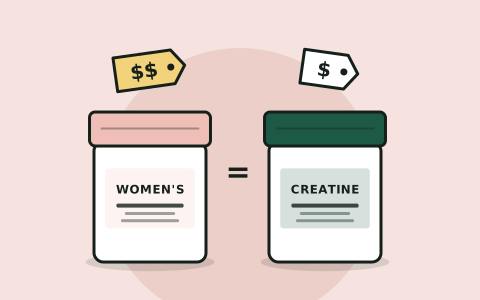
The Best Creatine for Women (and Why Most "Women's" Creatine Isn't Worth the Markup)
Five third-party-checked monohydrates compared on testing and price per 5 g serving.
Read the guide →
 Comparison
The Best Form of Creatine: Monohydrate vs HCl, Micronized and Creapure
Monohydrate, HCl, micronized, Creapure, buffered and gummies, judged on head-to-head trials.
Read the guide →
 Myths
Creatine and Magnesium Myths, Checked Against the Evidence
Hair loss, kidneys, bloating, sleep, anxiety: 20 common claims, each with a verdict and an evidence grade.
See the verdicts →