Creatine · Checker
Is This Creatine Any Good? Check Any Tub in Five Questions
Got a tub in your hand, or one in your basket? Answer five questions from the label and you'll get a verdict: good buy, fine with a caveat, or skip it. Each answer gets its own note, so you can see what's driving the result.
What the checker looks for
These are the same five things we use to rank creatine in our buying guides, turned into questions you can answer from the label.
| Question | What passes | Why it matters |
|---|---|---|
| Form | Creatine monohydrate (micronized and Creapure count) | It's the form behind almost all the research, and nothing has beaten it head to head (Antonio et al., 2021) |
| Dose | 3 to 5 g per serving | That's the daily dose the trials used (Kreider et al., 2017) |
| Testing seal | NSF Certified for Sport, Informed Sport or USP Verified | Supplements aren't checked by regulators before sale. A seal means an outside lab has |
| Extras | None | Proprietary blends hide amounts; stimulants don't belong in something you take every day |
| Price | Roughly 20 to 55 cents per 5 g | What plain monohydrate costs at major US retailers (our prices, October 2026) |
Where the tricky answers come from
"Buffered" and blends. Buffered creatine (often sold as Kre-Alkalyn) claims you need less because it doesn't break down in your stomach. A trial that tested exactly that found it didn't raise muscle creatine more than monohydrate, didn't improve results more, and didn't cause fewer side effects (Jagim et al., 2012). Blends are marked down for a simpler reason: if the label hides how much of each form you're getting, you can't tell whether you're getting enough.
HCl. It works. It just hasn't been shown to work better than monohydrate, and it usually costs more per gram. If monohydrate upsets your stomach even when you split the dose, HCl is a reasonable thing to try, which is why it gets a caveat and not a cross. Our comparison of creatine forms has the trials.
Big servings. A product with 10 g or more in one scoop isn't dangerous, but it's more likely to send you to the bathroom. In one study of soccer players, a single 10 g dose gave more than half of them diarrhea, while two 5 g doses were no worse than a placebo (Ostojic & Ahmetovic, 2008).
Small servings. Some products put 1 to 2 g in a serving, which makes the price per serving look low. The checker works out the price per 5 g when you give it the dose, so you're comparing like with like.
No seal. Plenty of plain monohydrate without a seal is perfectly good, so the checker doesn't fail it. You just have to take the brand's word for what's in the tub. If you compete in a drug-tested sport, that's not good enough: buy NSF Certified for Sport or Informed Sport, and search the exact product on the certifier's website before you buy. USP Verified checks label accuracy and contaminants but doesn't screen for banned substances.
Gummies. The checker isn't built for them. Creatine slowly breaks down in moist, acidic foods, and when NOW lab-tested 12 gummy brands in 2024, five had little to no creatine in them. If you want gummies, buy only from a brand that publishes a test result for each batch.
What the checker can't tell you
It reads the label, not what's inside the tub. A product can tick every box and still be under-dosed or contaminated, which is the whole point of independent testing. That's why the seal question carries so much weight, and why it's worth searching the product on the certifier's own site rather than trusting a logo on a photo.
If you want a shortcut, our best creatine for women guide compares five products that pass every check except, for the budget picks, the seal. And once you've bought one, the creatine calculator tells you how much to take and how long the tub will last.
Questions people ask
How do I know if my creatine is good quality?
Check four things on the label: it says creatine monohydrate, it has 3 to 5 g per serving, it carries a testing seal such as NSF Certified for Sport, Informed Sport or USP Verified, and there's no proprietary blend or added stimulants. Then compare the price per 5 g.
Is creatine without third-party testing safe?
Plain monohydrate from a well-known brand is usually fine, but without a seal you're relying on the brand's word for what's in the tub. If you're drug-tested in sport, buy only NSF Certified for Sport or Informed Sport products.
Is Creapure better than regular creatine monohydrate?
It's the same molecule, made in Germany to a tight purity standard. It doesn't work better, but it's a reasonable thing to pay a little extra for if the price gap is small.
Sources
- Antonio et al. 2021, Common questions and misconceptions about creatine (JISSN)
- Kreider et al. 2017, ISSN position stand on creatine safety and efficacy (JISSN)
- Jagim et al. 2012, Buffered creatine vs monohydrate (JISSN)
- Ostojic & Ahmetovic 2008, Stomach upset and creatine dose in athletes
- NOW Foods 2024 creatine gummy testing (report)
We link to the original study wherever we can. Read how we grade evidence and choose products.
More creatine guides
 Guide
What Is Creatine? How It Works and What It Does
Where creatine comes from, how it powers short, hard efforts, and what it can and can't do for you.
Read the guide →
 Guide
Creatine Dosage: How Much to Take and How to Take It
3–5 g a day, whether loading is worth it, when to take it, and what to mix it with.
Read the guide →
 Safety
Is Creatine Safe? What the Long-Term Studies Show
Kidneys, liver, hair, cramps and water weight: what the research shows, and who should check with a doctor first.
Read the guide →
 Guide
Creatine for Women: What the Research Actually Shows
The bulky, bloating and hair-loss worries, what the research shows after 40 and 50, and the dose that works.
Read the guide →
 Guide
Creatine and Your Brain: Does It Really Improve Memory and Focus?
Why the brain is harder to top up than muscle, who the trials say benefits, and the problem with the headline numbers.
Read the guide →
 Guide
Creatine Bloating and Water Weight: Causes and How to Fix It
Why the scale goes up, why your stomach might complain, and seven ways to reduce both.
Read the guide →
 Buying guide
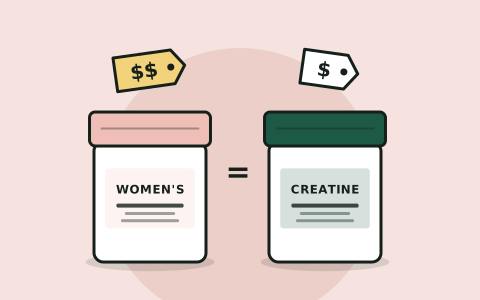
The Best Creatine for Women (and Why Most "Women's" Creatine Isn't Worth the Markup)
Five third-party-checked monohydrates compared on testing and price per 5 g serving.
Read the guide →
 Comparison
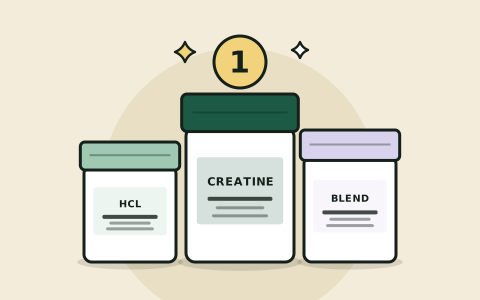
The Best Form of Creatine: Monohydrate vs HCl, Micronized and Creapure
Monohydrate, HCl, micronized, Creapure, buffered and gummies, judged on head-to-head trials.
Read the guide →
 Myths
Creatine and Magnesium Myths, Checked Against the Evidence
Hair loss, kidneys, bloating, sleep, anxiety: 20 common claims, each with a verdict and an evidence grade.
See the verdicts →