Creatine · Guide
Creatine and Your Brain: Does It Really Improve Memory and Focus?
For most young, healthy people who eat meat and sleep reasonably well, creatine probably won't make a difference to your thinking that you'd notice. The research on creatine and the brain is real, but the effects are small and inconsistent, and they show up most clearly in three groups: vegetarians, older adults, and people who are badly short of sleep.
In 2024, the European Food Safety Authority reviewed the evidence for a claim that creatine improves cognitive function in healthy adults and turned it down: across ten studies, the results weren't consistent (EFSA, via Nutrition Insight). The EU formally refused the claim in May 2026 (Regulation (EU) 2026/1118). That's a fair summary of where things stand: promising in places, not proven in general.
Quick answers
| Question | What the research shows | Evidence |
|---|---|---|
| Sharper thinking in healthy young adults? | Little or no effect in most trials | Weak |
| Vegetarians and vegans | Better memory and reasoning scores in two trials | Early |
| Older adults | Possible memory benefit | Early |
| Sleep deprivation | One high dose helped in a small trial | Early |
| Depression, alongside an antidepressant | Faster improvement in one trial | Early |
| Dose | 3–5 g a day; no evidence more helps a rested brain |
Why the brain is harder to top up than muscle
Your brain runs on the same fast energy system creatine supports in muscle, so the idea makes sense on paper. The catch is getting creatine in.
Muscle soaks up supplemental creatine readily. The brain makes much of its own and has relatively few of the transporters that carry creatine across the blood-brain barrier. Imaging studies suggest a supplement raises creatine in the brain by roughly 5 to 15%, compared with 20 to 40% in muscle (Bučević Popović et al., 2026).
That gap is a large part of why someone can notice creatine in the gym and nothing in their head. Responding in your muscles tells you very little about whether your brain will respond.
What the trials show
Young, healthy people who eat meat. A 2018 systematic review of six trials found that creatine might help short-term memory and reasoning, but in young healthy people, performance didn't change (Avgerinos et al., 2018). If you're in this group, you're starting with full stores and a brain that isn't under strain, so there isn't much for creatine to fix.
Vegetarians. This is where the clearest results come from. In a 2003 crossover trial, 45 young vegetarians took 5 g of creatine a day for six weeks. On a backward digit-span test (hearing a string of numbers and repeating it in reverse), average recall rose from about 7 digits to 8.5, and scores on a timed reasoning test improved too (Rae et al., 2003). In a later trial of 121 young women, creatine improved memory in the vegetarians but not in the meat eaters (Benton & Donohoe, 2011). Vegetarians get almost no creatine from food, so they have more room to top up.
Older adults. A 2022 meta-analysis found creatine improved memory, mainly in adults aged 66 to 76; in younger people it made no difference (Prokopidis et al., 2022). Other researchers later argued that analysis counted some people more than once. When it was re-run, the overall effect was no longer significant, but the effect in older adults held up (Citherlet, 2026). Promising, but based on a handful of small studies.
Sleep deprivation. In a 2024 study, 15 people were kept awake overnight and given either a single large dose of creatine (0.35 g per kg of bodyweight, about 25 g for a 70 kg person) or a placebo. The creatine group did better on processing speed and short-term memory, starting about three hours after the dose (Gordjinejad et al., 2024). The researchers warned against trying that dose at home. It's a small, one-off study, but it fits the idea that creatine helps most when the brain's energy supply is under pressure.
Depression. In a 2012 trial, 52 women with major depression all took the antidepressant escitalopram, and half also took 5 g of creatine a day. The creatine group improved faster, with a difference by week two (Lyoo et al., 2012). One small trial isn't a reason to self-treat. If you take medication for depression, or have bipolar disorder, talk to your prescriber before adding creatine.
The problem with the headline numbers
You'll see creatine-for-the-brain articles quote a 2024 meta-analysis of 16 trials that found improvements in memory, attention and processing speed (Xu et al., 2024). Even taken at face value, the effects were small, and overall cognitive function and executive function didn't change significantly.
But it has the same weakness as the 2022 memory analysis. Several of the trials it includes report many separate test scores from the same people, and the analysis treated each score as if it came from a different study. That makes the results look more certain than they are (Citherlet, 2026). EFSA raised the same concern when it reviewed the evidence.
None of this means creatine does nothing for the brain. It means the best-known summaries probably overstate how reliable the effect is, especially for healthy people who are already well fed and rested.
Why people swear by it anyway
Ask someone what creatine improved and they'll often say they feel "sharper" or "less foggy". That's hard to argue with and hard to measure. The trials test specific things: how many digits you can recall, how fast you react, how many patterns you solve in a set time. Those are the effects that sometimes show up, and they're small enough that you wouldn't notice them in daily life.
Expectation is powerful with anything you take every morning. If you can't point to something specific that changed, that's usually a sign it's coming from the expectation, not the creatine.
If you want to try it for your brain
- Take 3 to 5 g of creatine monohydrate a day. That's the dose in the vegetarian trials and the one that keeps your muscles full. There's no good evidence that taking 15 to 20 g a day for weeks helps a well-rested brain more, and doses that size are more likely to upset your stomach. Our creatine calculator gives you a figure for your bodyweight.
- Give it at least four to six weeks. The vegetarian trial that found an effect ran for six.
- Measure something before you start. Pick a test you can repeat, such as a free digit-span or reaction-time test online, and take it a few times over a week to get a baseline. Repeat it after six weeks. It won't be a proper trial, but it beats "I think I feel sharper".
- Fix sleep first. If you're short on sleep, more sleep will do far more for your thinking than any supplement.
Who should check with a doctor first
Talk to your doctor before taking creatine if you have kidney disease, are pregnant or breastfeeding, or have bipolar disorder or take medication for depression. Creatine slightly raises creatinine on blood tests, so mention it before any blood work. More in is creatine safe?
Questions people ask
Does creatine make you smarter?
Not noticeably for most healthy people. Trials have found small improvements on specific memory and reasoning tests, mostly in vegetarians, older adults and people short of sleep. In young, rested people who eat meat, most studies found little or no effect.
How much creatine should I take for brain benefits?
3 to 5 g of creatine monohydrate a day, for at least four to six weeks. There's no good evidence that higher daily doses help a well-rested brain more.
Why do I feel creatine in the gym but not in my head?
Muscle takes up supplemental creatine far more readily than the brain does. A supplement raises muscle creatine by roughly 20 to 40% but brain creatine by only about 5 to 15%, so responding in the gym doesn't mean your brain will respond.
Sources
- EFSA 2024 opinion on creatine and cognitive function (Nutrition Insight report)
- Commission Regulation (EU) 2026/1118 refusing a health claim
- Avgerinos et al. 2018, Creatine and cognitive function in healthy individuals: systematic review (Exp Gerontol)
- Rae et al. 2003, Creatine and brain performance in vegetarians (Proc R Soc B)
- Benton & Donohoe 2011, Creatine and cognition in vegetarians and omnivores (Br J Nutr)
- Prokopidis et al. 2022, Creatine and memory: meta-analysis (Nutrition Reviews)
- Xu et al. 2024, Creatine and cognitive function in adults: meta-analysis (Frontiers in Nutrition)
- Citherlet 2026, Commentary on double counting in the creatine–cognition meta-analyses (Frontiers in Nutrition)
- Gordjinejad et al. 2024, Single dose of creatine during sleep deprivation (Scientific Reports; Neuroscience News report)
- Lyoo et al. 2012, Creatine added to escitalopram in women with depression (Am J Psychiatry)
- Bučević Popović et al. 2026, Bioavailability of oral creatine (NutraIngredients report)
We link to the original study wherever we can. Read how we grade evidence and choose products.
More creatine guides
 Guide
What Is Creatine? How It Works and What It Does
Where creatine comes from, how it powers short, hard efforts, and what it can and can't do for you.
Read the guide →
 Guide
Creatine Dosage: How Much to Take and How to Take It
3–5 g a day, whether loading is worth it, when to take it, and what to mix it with.
Read the guide →
 Safety
Is Creatine Safe? What the Long-Term Studies Show
Kidneys, liver, hair, cramps and water weight: what the research shows, and who should check with a doctor first.
Read the guide →
 Guide
Creatine for Women: What the Research Actually Shows
The bulky, bloating and hair-loss worries, what the research shows after 40 and 50, and the dose that works.
Read the guide →
 Guide
Creatine Bloating and Water Weight: Causes and How to Fix It
Why the scale goes up, why your stomach might complain, and seven ways to reduce both.
Read the guide →
 Buying guide
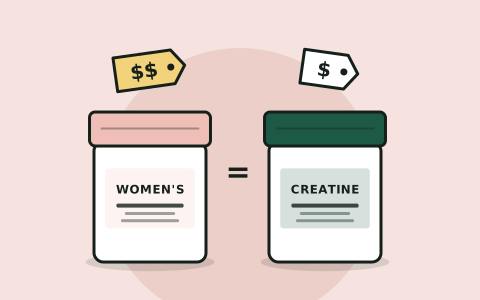
The Best Creatine for Women (and Why Most "Women's" Creatine Isn't Worth the Markup)
Five third-party-checked monohydrates compared on testing and price per 5 g serving.
Read the guide →
 Comparison
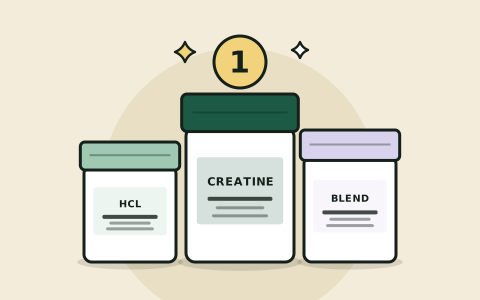
The Best Form of Creatine: Monohydrate vs HCl, Micronized and Creapure
Monohydrate, HCl, micronized, Creapure, buffered and gummies, judged on head-to-head trials.
Read the guide →
 Myths
Creatine and Magnesium Myths, Checked Against the Evidence
Hair loss, kidneys, bloating, sleep, anxiety: 20 common claims, each with a verdict and an evidence grade.
See the verdicts →