Creatine · Buying guide
The Best Creatine Supplements (2026): Five Tested Monohydrates Compared
We earn a commission if you buy through links on this page. It doesn't change what we recommend or the price you pay. How we make money
The best creatine is plain creatine monohydrate, 3 to 5 g per serving, from a brand that has its product checked by an independent lab. That's it. Every other form, blend and flavor costs more without working better (Antonio et al., 2021).
Our top pick is Thorne Creatine: 5 g of micronized monohydrate, NSF Certified for Sport, at under 50 cents a serving. If you'd rather spend half that, Optimum Nutrition Micronized Creatine is the same monohydrate used in the research, with lighter testing.
Our picks
Best overall
Thorne Creatine
- Form
- Micronized monohydrate
- Testing
- NSF Certified for Sport
- Per 5 g
- About 49¢
NSF Certified for Sport, listed in NSF's own database, and stocked in stores as well as online.
Best value
Optimum Nutrition Micronized Creatine
- Form
- Micronized monohydrate
- Testing
- Brand's own banned-substance testing
- Per 5 g
- About 25–27¢
The same monohydrate used in the research for about half the price. You give up batch-level independent testing, not effectiveness.
Runner-up
Momentous Creatine
- Form
- Micronized monohydrate, own spec
- Testing
- NSF Certified for Sport
- Per 5 g
- About 44–48¢
NSF certified, with extra purity screening the brand publishes, and usually a few cents cheaper than Thorne.
Smallest tub to try
Klean Athlete Klean Creatine
- Form
- Monohydrate
- Testing
- NSF Certified for Sport
- Per 5 g
- About 52–58¢
NSF certified, in a smaller tub that costs less up front while you find out if creatine suits you.
Lowest price
NOW Sports Creatine Monohydrate
- Form
- Monohydrate
- Testing
- Facility GMP; brand's own lab testing
- Per 5 g
- About 20¢
The cheapest plain monohydrate we found. The testing covers the factory, not each batch.
Prices change often; check the current price before you buy. Rankings follow our method, not commission.
How we chose
Every product here passed the same four checks, in this order. You can read the full method in how we choose products.
- Form and dose. Creatine monohydrate only, with a full 3–5 g in one serving. That's the form and dose behind almost all the research. See the best form of creatine for why.
- Independent testing. Supplements aren't checked by regulators before they go on sale. We favored products in the NSF Certified for Sport or Informed Sport databases, where an outside lab tests for label accuracy, contaminants and substances banned in sport.
- Price per 5 g serving. Not per tub, which hides how many servings you get.
- Nothing extra. No proprietary blends, added stimulants or "fat-burning" ingredients.
We didn't rank on taste or mixing. Plain monohydrate tastes of almost nothing, and the differences in how it dissolves are small. We haven't lab-tested these products ourselves; the testing we rely on comes from the certification programs, whose databases you can search.
Prices were checked in October 2026 and change often. Check the current price before you buy. We last checked every product's certification against the brand's own page and the certifier's listings on 1 November 2026.
Comparison table
All five are unflavored creatine monohydrate with 5 g per serving.
| Product | Best for | Source | Independent testing | Approx. price per 5 g | |
|---|---|---|---|---|---|
| Thorne Creatine | Best overall; easy to find in stores | Micronized monohydrate | NSF Certified for Sport | ~$0.49 | Check price |
| Optimum Nutrition Micronized Creatine | Best value | Micronized monohydrate | Brand's own banned-substance testing | ~$0.25–0.27 | Check price |
| Momentous Creatine | Runner-up | Micronized monohydrate, made to Momentous's own spec | NSF Certified for Sport | $0.44–0.48 | Check price |
| Klean Athlete Klean Creatine | Trying creatine for the first time | Monohydrate | NSF Certified for Sport | $0.52–0.58 | Check price |
| NOW Sports Creatine Monohydrate | Lowest price | Monohydrate | Facility GMP certified; brand's own lab testing | ~$0.20 | Check price |
Which one should you buy?
If you want one answer: Thorne. NSF Certified for Sport, for around 50 cents a day, and stocked in stores as well as online. It doesn't work better than cheaper monohydrate, but you know exactly what's in the tub.
If Thorne is out of stock or Momentous is cheaper that day: Momentous is also NSF certified. It relaunched in June 2026 as "Signature Spec", made to its own specification instead of from Creapure.
If you compete in a drug-tested sport: buy only NSF Certified for Sport or Informed Sport products, and check the exact product and lot number on the certifier's website. Thorne, Momentous and Klean all have NSF Certified for Sport. Your federation may specify which certification it accepts.
If price matters most: Optimum Nutrition or NOW. Both are the same monohydrate used in the research, at roughly half the price of the certified picks. You're giving up batch-level independent testing, not effectiveness.
If you want to buy in a store: Thorne is widely stocked.
If you're trying creatine for the first time: Klean Athlete's smaller tub costs less up front, so you're not committing to a big tub before you know you'll stick with it.
If you're a woman: the same picks apply. Creatine sold "for women" is almost always the same monohydrate at a higher price. Our best creatine for women guide covers that in detail.
If you're vegetarian or vegan: creatine monohydrate is made synthetically, not from animal products. Vegetarians often notice the biggest effect, because a plant-based diet supplies almost no creatine. See creatine for vegetarians and vegans.
What we'd skip
| Product type | Why we'd skip it |
|---|---|
| Creatine HCl | Dissolves better, but costs 2–3× as much per gram and hasn't beaten monohydrate in head-to-head trials |
| Buffered creatine (Kre-Alkalyn) | A controlled trial found no advantage over monohydrate |
| Creatine gummies | In a 2024 lab test, 5 of 12 gummy brands had little or no creatine |
| "Creatine blends" and pre-workouts | Often under-dosed, with extras you don't need |
| Proprietary blends | You can't tell how much creatine you're getting |
A 30-second label check
Whatever you buy, turn the tub around and check:
- The ingredient line says "creatine monohydrate" and nothing else, or close to it.
- A serving is 3–5 g of creatine. Some scoops hold less than you'd expect.
- There's a certification seal you can look up: NSF Certified for Sport, Informed Sport or USP Verified. "Made in a GMP facility" is about the factory, not the product.
- No proprietary blend. If the amounts aren't listed, skip it.
Our creatine checker runs through these questions for any tub and gives you a verdict, and the label glossary explains every term you'll see.
How to take it
3 to 5 g a day, every day, at whatever time you'll remember. A loading phase is optional. Our creatine calculator works out your dose and how long your tub will last, and our dosage guide covers timing, mixing and missed days.
Questions people ask
What is the best creatine to buy?
Plain creatine monohydrate with independent testing. Our top pick is Thorne Creatine; Optimum Nutrition Micronized is the best value.
Is expensive creatine better?
No. Pricier products may have stronger testing or Creapure raw material, but monohydrate works the same whichever brand makes it.
Is creatine HCl better than monohydrate?
No. It dissolves better but hasn't worked better in head-to-head trials, and it costs more per gram.
Sources
- Antonio et al. 2021, Common questions and misconceptions about creatine (JISSN)
- Kreider et al. 2017, ISSN position stand on creatine safety and efficacy (JISSN)
- NOW Foods 2024 creatine gummy testing (report)
- Thorne Creatine product page
- Momentous Creatine product page
- Momentous vs Thorne price and certification comparison
We link to the original study wherever we can. Read how we grade evidence and choose products.
More creatine guides
 Guide
What Is Creatine? How It Works and What It Does
Where creatine comes from, how it powers short, hard efforts, and what it can and can't do for you.
Read the guide →
 Guide
Creatine Dosage: How Much to Take and How to Take It
3–5 g a day, whether loading is worth it, when to take it, and what to mix it with.
Read the guide →
 Guide
Creatine Loading Phase: Do You Need It?
Loading fills your muscles in a week instead of four. When it's worth it, and how to do it without the stomach upset.
Read the guide →
 Guide
When to Take Creatine: Before or After a Workout?
Before or after training, rest days, morning or night: why consistency beats timing.
Read the guide →
 Safety
Is Creatine Safe? What the Long-Term Studies Show
Kidneys, liver, hair, cramps and water weight: what the research shows, and who should check with a doctor first.
Read the guide →
 Safety
Creatine and Your Kidneys: What the Research Says
Why creatine raises creatinine on a blood test, what the studies show, and who should avoid it.
Read the guide →
 Safety
Does Creatine Cause Hair Loss? What the Research Actually Shows
The 2009 DHT study behind the worry, the 2025 trial that measured hair directly, and what's still unknown.
Read the guide →
 Guide
Creatine for Women: What the Research Actually Shows
The bulky, bloating and hair-loss worries, what the research shows after 40 and 50, and the dose that works.
Read the guide →
 Guide
Creatine After Menopause: What It Can Do for Women Over 40 and 50
Muscle, bone and walking speed: what two 2-year trials found, and why training is the part that matters.
Read the guide →
 Guide
Creatine for Vegetarians and Vegans: Why You Might Benefit More
Why a meat-free diet means lower creatine stores, what happens when vegetarians supplement, and how to check a tub is vegan.
Read the guide →
 Guide
Creatine for Older Adults: What It Does for Muscle and Strength Over 50
What 20-plus trials in adults over 50 found for muscle, strength, bone and memory, and why training is the part that matters.
Read the guide →
 Guide
Creatine and Your Brain: Does It Really Improve Memory and Focus?
Why the brain is harder to top up than muscle, who the trials say benefits, and the problem with the headline numbers.
Read the guide →
 Guide
Creatine Bloating and Water Weight: Causes and How to Fix It
Why the scale goes up, why your stomach might complain, and seven ways to reduce both.
Read the guide →
 Buying guide
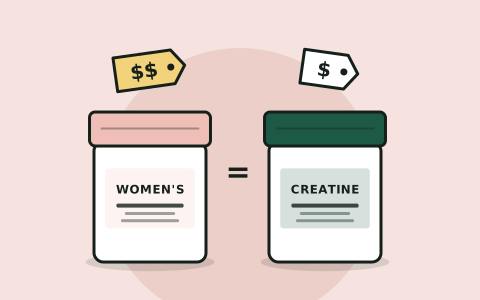
The Best Creatine for Women (and Why Most "Women's" Creatine Isn't Worth the Markup)
Five third-party-checked monohydrates compared on testing and price per 5 g serving.
Read the guide →
 Comparison
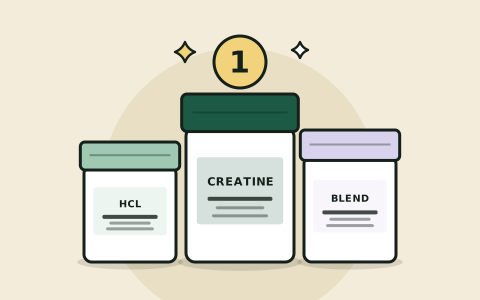
The Best Form of Creatine: Monohydrate vs HCl, Micronized and Creapure
Monohydrate, HCl, micronized, Creapure, buffered and gummies, judged on head-to-head trials.
Read the guide →
 Myths
Creatine and Magnesium Myths, Checked Against the Evidence
Hair loss, kidneys, bloating, sleep, anxiety: 20 common claims, each with a verdict and an evidence grade.
See the verdicts →